
Gunn IMS & Dry Needling Therapy in the Toronto Annex
If you are dealing with chronic muscle tightness, persistent neck or back pain, or a sports injury that keeps flaring up, it can be frustrating when stretching and massage provide only temporary relief. Persistent musculoskeletal pain is often connected to more than an isolated “tight knot.” Nerve-related irritation can keep muscle fibres in a shortened, overactive state and contribute to ongoing discomfort.
You're not alone
An estimated 7.6 million people in Canada, or 1 in 5, live with chronic pain [1]. Results from IMS and dry needling vary from person to person, so your physiotherapist will build your plan around your assessment and progress.
At Resilience Physiotherapy in the Toronto Annex, we offer advanced Gunn IMS and dry needling therapy. Delivered by experienced physiotherapists with advanced orthopaedic training, this evidence-based [2][3] neurofunctional approach targets chronically shortened muscle tissue and supports pain relief as part of a personalized rehabilitation plan.
What is Gunn IMS and How Does It Differ From Acupuncture?
Gunn IMS and traditional acupuncture both use thin, sterile acupuncture needles, but they are based on different treatment systems and clinical approaches.
- Traditional Acupuncture: Grounded in Traditional Chinese Medicine, acupuncture targets specific meridians or energy pathways, known as Qi, to restore balance and support systemic health. Needles are often left in place for 15 to 30 minutes.
- IMS & Dry Needling: Developed by Dr. Chan Gunn at the University of British Columbia, [4] this modern Western approach is used to address neuropathic pain patterns linked to irritation at the nerve root. Your physiotherapist inserts the needle into shortened muscle bands or myofascial trigger points to create a local twitch response and encourage the tissue to release.
When the needle reaches a hypersensitive muscle band, it can trigger a brief involuntary contraction known as a localized twitch response. This response helps the muscle relax, reduces protective tension, and supports a return toward its normal resting length.
IMS Dry Needling vs. Acupuncture vs. Massage in Toronto: Which Is Right for You?
IMS dry needling, acupuncture and massage are all used to help with pain and muscle tension, but they work in different ways.
| Factor | IMS & Dry Needling | Traditional Acupuncture | Massage Therapy |
|---|---|---|---|
| Approach | Based on anatomy and neurophysiology | Based on Traditional Chinese Medicine | Hands-on soft tissue treatment |
| What's targeted | Shortened muscle bands and trigger points | Meridians and mapped acupuncture points | Muscles and soft tissue |
| Uses needles | Yes: thin, sterile, single-use | Yes: thin, sterile, single-use | No |
| Treatment time | Needles go in and out quickly | Needles stay in for 15–30 minutes | Typically 30–90 minutes |
| What it feels like | Brief deep ache or muscle twitch | Usually gentle; mild warmth or dull ache | Pressure that varies with technique |
| Often chosen for | Persistent tightness, myofascial pain, recurring flare-ups | Pain relief and general wellbeing | Muscle tension and relaxation |
| Available at Resilience | Yes, delivered by rostered physiotherapists | Yes, as part of physiotherapy care | Not offered at our clinic |
Not sure which is right for you? Your physiotherapist can assess your symptoms and recommend the best option, or a combination, for your recovery.
Book a Free Consultation CallThe Science Behind Neuropathic Pain and Intramuscular Stimulation / Dry Needling
IMS and dry needling can be particularly effective for chronic pain that has not responded well to temporary or passive treatment alone. To understand why, it helps to look at what happens when a muscle becomes persistently overactive.
When a nerve root along the spine becomes irritated, whether from posture, arthritic changes, or a previous injury, it can continue sending signals to the muscles it supplies. Those muscles may remain tightly contracted, creating tender, shortened bands of tissue that pull on tendons, overload nearby joints, and contribute to ongoing pain and inflammation.
During an IMS or dry needling session, the needle targets these shortened muscle bands and can trigger a local twitch response. This response helps interrupt the cycle of persistent muscle contraction, reduce muscle tone, and create a better starting point for movement, strengthening, and lasting pain relief.
Core Benefits of Dry Needling and IMS Therapy
Conditions Treated with IMS Dry Needling in Toronto
IMS and dry needling take a whole-body approach to assessing persistent pain and muscle tension. When pain appears in a limb or another peripheral area, our clinicians assess the related movement patterns, muscles, joints, and spinal nerve roots that may be contributing to the dysfunction.
This approach is used to treat concerns such as:
- Chronic lower back pain and sciatica [3]
- Chronic neck tension, whiplash, and tension headaches [2] [5]
- Rotator cuff injuries, frozen shoulder, and shoulder impingement
- Tennis elbow and golfer’s elbow
- Hip osteoarthritis, gluteal tendinopathy, and piriformis syndrome
- Patellofemoral pain syndrome and Achilles tendonitis
- Repetitive strain injuries and postural fatigue from desk work
What to Expect During and After Your Session
Your treatment begins with a detailed orthopaedic and neurological evaluation to identify signs of nerve irritation, including temperature changes, tender muscle bands, and movement restrictions. This assessment helps your physiotherapist determine which areas are contributing to your symptoms and whether IMS or dry needling is appropriate.
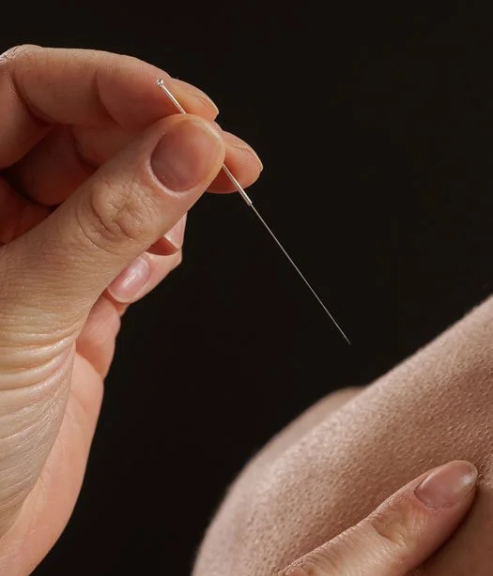
During treatment, your therapist inserts clean, single-use, sterile needles into the affected muscle bands. Healthy muscle tissue often produces little response, while shortened, overactive tissue may create a momentary deep ache, heavy sensation, or quick twitch. Although the sensation can be intense for a brief moment, many patients notice a clear release of tension afterward.
Post-Treatment Care & Recovery Tips
It is normal to experience localized muscle soreness or heaviness for 24 to 48 hours after a session. This often feels similar to delayed onset muscle soreness after an intense workout.
To support your recovery, stay hydrated and complete any gentle mobility drills prescribed by your therapist. We generally recommend avoiding heavy weight training or strenuous activity for the first 24 hours after treatment, giving the nervous system time to settle and the treated muscle time to recover.
Book a Consultation at Resilience Physiotherapy
Conveniently located at 738 Spadina Ave, Suite 200, Resilience Physiotherapy is a three-minute walk south of Spadina TTC Subway Station, next to the Miles Nadal Jewish Community Centre.
Whether you commute from Yorkville, study at the University of Toronto, or live in Little Italy, our clinic provides an expert, welcoming setting for assessment and rehabilitation. If persistent muscle tightness or recurring pain is limiting how you move, our team can determine whether IMS dry needling or functional acupuncture is the right fit for your recovery plan.
Frequently Asked Questions About Gunn IMS & Dry Needling
-
We insert an acupuncture needle into a knot or trigger point to get it to release. When it releases, you’ll feel a contraction which is what is called a ‘twitch’ response.
When muscle fibres are released, it allows a muscle that has become tight & short to begin to lengthen. In turn, there is reduced pull on the muscle’s insertion point and the pressure is also reduced on the surrounding joints.
Many patients notice reduced pain and muscle tension, particularly in the short to mid term [2][3].
-
The simple answer is yes BUT honestly I think it feels weird more than anything else!
It’s strange because the acupuncture needle is triggering a contraction to happen in your muscle when it’s inserted into a knot but it’s not your brain triggering the contraction. It’s a feeling that some people describe as a ‘wiggly worm’ wriggling under their skin as the muscle releases. Generally the tighter the muscle, the more reaction we will get and in certain areas the feeling can be really intense.
Areas like your adductors, calves and upper fibres of trapezius tend to carry a lot of tension so they may be more uncomfortable when needled.
The good news is that the needles go in then out and do not linger for any length of time so it doesn’t take long to perform (aka it’s over before you know it!).
The most common feeling post treatment is very similar to the delayed onset muscle soreness (DOMS) that you would get post a big workout after lifting weights. This feeling typically only lasts 1-2 days post treatment.
-
Nope, I joke that the only similarity between acupuncture and dry needling is that we use acupuncture needles for both. The delivery and methodology is completely different.
In acupuncture it’s rooted in traditional Chinese medicine so it’s based on flows of energy, meridians and performed in very specific points that have been mapped out on the body for hundreds of years.
For dry needling it’s much more anatomically based. We assess for areas that are facilitated and we insert the needles into knots and trigger points that are causing the muscle to live in a shortened position. The twitch response that’s induced helps to lengthen the muscle fibres creating more length in the muscle and in turn decompresses areas of tension.
Acupuncture is relatively gentle and may induce some sensations of heat or achiness, but it’s not as uncomfortable as dry needling. The needles stay in for ~15-20 minutes during a session of acupuncture, whereas in dry needling, the needles go in and out and are only repeated on the trigger points identified so the whole process is much shorter.
-
No. We recommend that you rest and allow the muscles to heal & repair for at least 24 hours post session.
Any post treatment soreness should have dissipated before you load the area again.
-
Yes! I find it incredibly beneficial and have had it done many times for many different injuries.
When we are training and taking a dry needling course, the way we learn is on each other. We’re partnered up and practice each and every point on one another. It’s helpful to know how it feels for any technique we use in practice, to be able to relate to our patients.
-
Yes. When performed by a licensed, certified physiotherapist with advanced anatomical training, dry needling and IMS are exceptionally safe, minimally invasive procedures. At Resilience Physiotherapy, we use sterile, single-use, medical-grade needles in a clean clinical environment.
-
Many patients notice improved flexibility and a lighter feeling in the treated muscle shortly after their first visit. For chronic or longstanding neuropathic conditions, treatment often involves a series of sessions that allows us to reduce persistent muscle tension, break the pain cycle, and support longer-term nervous system recovery. Your physiotherapist will recommend a schedule based on your symptoms, progress, and rehabilitation goals.
-
Yes. Because IMS and dry needling are delivered as part of your overall physiotherapy and rehabilitation program, they are not billed separately. Sessions are billed under Physiotherapy and are fully covered through standard extended health insurance benefits.
Hernández-Secorún M, et al. Effectiveness of Dry Needling in Improving Pain and Function in Comparison with Other Techniques in Patients with Chronic Neck Pain: A Systematic Review and Meta-Analysis. Pain Research and Management. 2023.
Dach F, Ferreira KS. Treating myofascial pain with dry needling: a systematic review for the best evidence-based practices in low back pain. Arquivos de Neuro-Psiquiatria. 2023. https://www.ncbi.nlm.nih.gov/pmc/articles/PMC10756779/
Governor General of Canada. Dr. Chit Chan Gunn, Order of Canada.
Navarro-Santana MJ, et al. Effectiveness of Dry Needling for Myofascial Trigger Points Associated with Neck Pain Symptoms: An Updated Systematic Review and Meta-Analysis. 2020. https://www.ncbi.nlm.nih.gov/pmc/articles/PMC7602246/